-
Written by Yinka Olajubu
June 22, 2026 | 9:31 pm UTC+0
Introduction
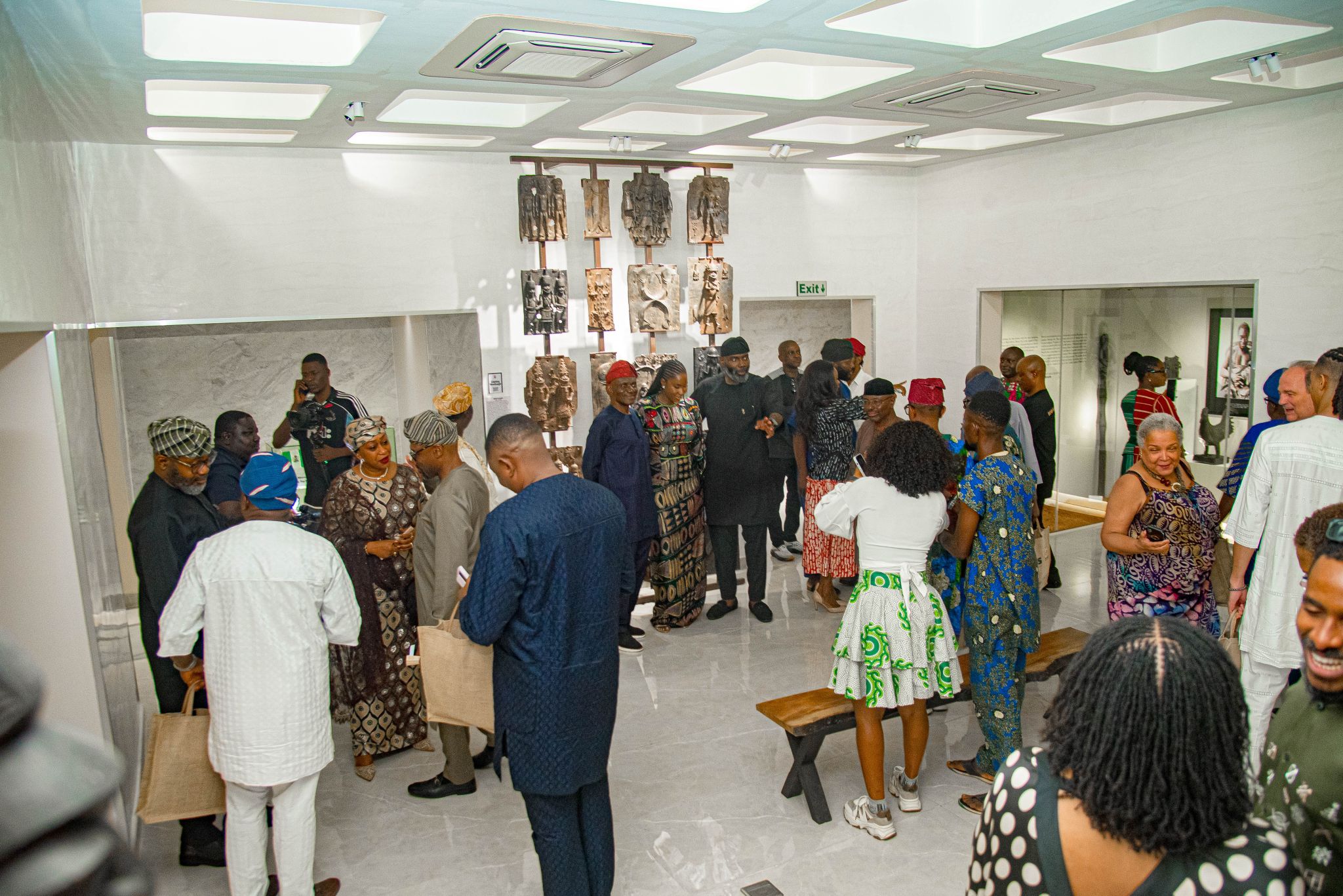
Recently, the National Museum in Lagos opened its doors to a striking new exhibition. Visitors walked through galleries that felt radically different from the past: the lighting was deliberate, the curation flowed with a captivating narrative, and the artifact arrangements felt undeniably modern. The launch was widely celebrated, but behind the scenes, the exhibition’s success revealed a complex reality. The project wasn’t funded by federal allocation; it was brought to life through a corporate partnership with IHS Nigeria.
While the National Commission for Museums and Monuments (NCMM) is a federal agency tasked with safeguarding Nigeria’s vast cultural treasury, the reality is that it must regularly source outside partnerships simply to execute its basic duties. This single, beautifully executed exhibition has provoked a profound question within the cultural sector: If a lone injection of private funding can create something this spectacular, what could Nigerian museums achieve if they were properly and consistently funded?
The Deficit of Preservation
For over half a century, the NCMM has overseen some of the most historically significant art and artifacts on the African continent. Yet, year after year, the institution has fought an uphill battle against systemic underfunding.
Museums are not merely storage units for the old and dusty; they are active, living infrastructures. They require specialized climate control to stop centuries-old wood and terracotta from decaying. They require high-level security to prevent theft, advanced digital archiving to catalogue history for future generations, and modern architectural design to make spaces inviting to the public.
When funding is treated as an afterthought, the loss is cumulative. It isn’t just about dim lighting or outdated display cases; it is about the literal degradation of irreplaceable physical history.
The Human Cost of Austerity
Perhaps the most tragic casualty of this funding deficit is not the artifacts, but the people who care for them. The NCMM possesses a remarkably rich reservoir of home-grown professionals, historians, archaeologists, conservators, curators and exhibition officers who understand the nuances of Nigeria’s heritage better than anyone else in the world.
Yet, talent cannot survive on passion alone. Decades of tight budgets have translated into stagnant wages, a lack of access to modern research tools, and fewer opportunities for international scholarly exchange. Over the years, many of Nigeria’s finest cultural minds have had to leave the institution in deep frustration.
When a seasoned exhibition officer, conservator or a brilliant young curator walks away, they take decades of institutional memory and specialized knowledge with them. Brain drain in the cultural sector is just as devastating as it is in medicine or technology. Without financial investment in human capital, we lose the gatekeepers of our story.
Moving Beyond Beg-Thy-Neighbour Culture
The success of the Lagos exhibition proves that corporate social responsibility and private partnerships are incredibly valuable. However, a national heritage strategy cannot rely entirely on philanthropy. Philanthropy is conditional, cyclical, and often tied to the marketing goals of corporations.
Adequate, structured funding from both federal allocations and dedicated cultural endowments is what transforms a museum system from a reactive survivor into a proactive cultural powerhouse. Proper funding allows for long-term planning. It means a museum can plan excavations, secure international traveling exhibitions, and invest in decades-long conservation projects without wondering if the lights will stay on next month.
Furthermore, we must reframe how we view museum funding. It is not an act of charity, nor is it a luxury expense for an idealized past. It is an economic and social investment.
The ROI of Memory
In a world where nations aggressively leverage “soft power,” museums are a country’s ultimate business card. A well-funded museum network in Nigeria is a direct catalyst for cultural tourism, drawing global travellers, researchers, and diaspora Africans seeking connection to their roots.
More importantly, museums dictate national identity. In a diverse and complex nation, museums serve as the spaces where disparate histories meet, where commonalities are discovered, and where a shared national narrative is forged. When we fund museums, we fund the mirrors in which our children see their potential.
The NCMM gave Nigerians a glimpse of what is possible at the Lagos exhibition. It proved that the vision is there, the expertise is there, and the history is undeniably there. The only missing element is the sustained financial oxygen required to let it breathe. To truly unlock Nigeria’s cultural future, we must recognize that guarding our past is well worth the price.
Conclusion
This vibrant rebirth in Lagos did not happen by accident. It required a deliberate vision to bridge the gap between bureaucratic stagnation and private-sector efficiency, a feat orchestrated by the Director-General of the NCMM. By actively courting corporate allies like IHS Nigeria, the Director-General demonstrated the precise kind of entrepreneurial leadership required to navigate the realities of modern cultural management. It was a masterclass in resourceful leadership, proving that the agency’s leadership possesses the drive to elevate Nigerian heritage to global standards.
However, the triumph in Lagos cannot remain an isolated oasis. Nigeria’s history does not begin and end in a single coastal city. The stunning artifacts of the Nok culture, the intricate bronze masterworks of Benin, the ancient monoliths of Cross River, and the rich Islamic heritage of the north all deserve the same dignity of display.
The success of the Lagos exhibition must serve as a blueprint, not a final destination. There is an urgent, undeniable need to mirror this exact model of revitalization in every corner of the country. Every state capital deserves a world-class cultural hub where its citizens can engage with their ancestry in spaces that inspire awe rather than apathy. By scaling the Director-General’s collaborative approach nationwide, Nigeria can transform its scattered, underfunded regional museums into a formidable web of national pride and economic opportunity. The fire has been lit in Lagos; it is now time to carry the torch across the entire nation.
Category: Uncategorized
-
Beyond the Lagos Exhibition: A Blueprint for Revitalizing Nigeria’s Regional Museums
-
Safeguarding Memory Conservation and Security in the Modern Museum
-
Written by Nwaokobia Stephanie Chinonso, Okolie Ogochukwu, and Ayodele Adewale Abiodun
October 28, 2025 | 10:33 pm UTC+0
Introduction
Museums are often imagined as quiet places of history—buildings filled with ancient objects, glass cases, labels, and carefully arranged exhibitions. To the public, they are spaces of learning, tourism, and cultural reflection. Yet behind the calm atmosphere of galleries lies a far more complex responsibility: the continuous struggle to protect fragile cultural materials from destruction, theft, neglect, environmental damage, and time itself.
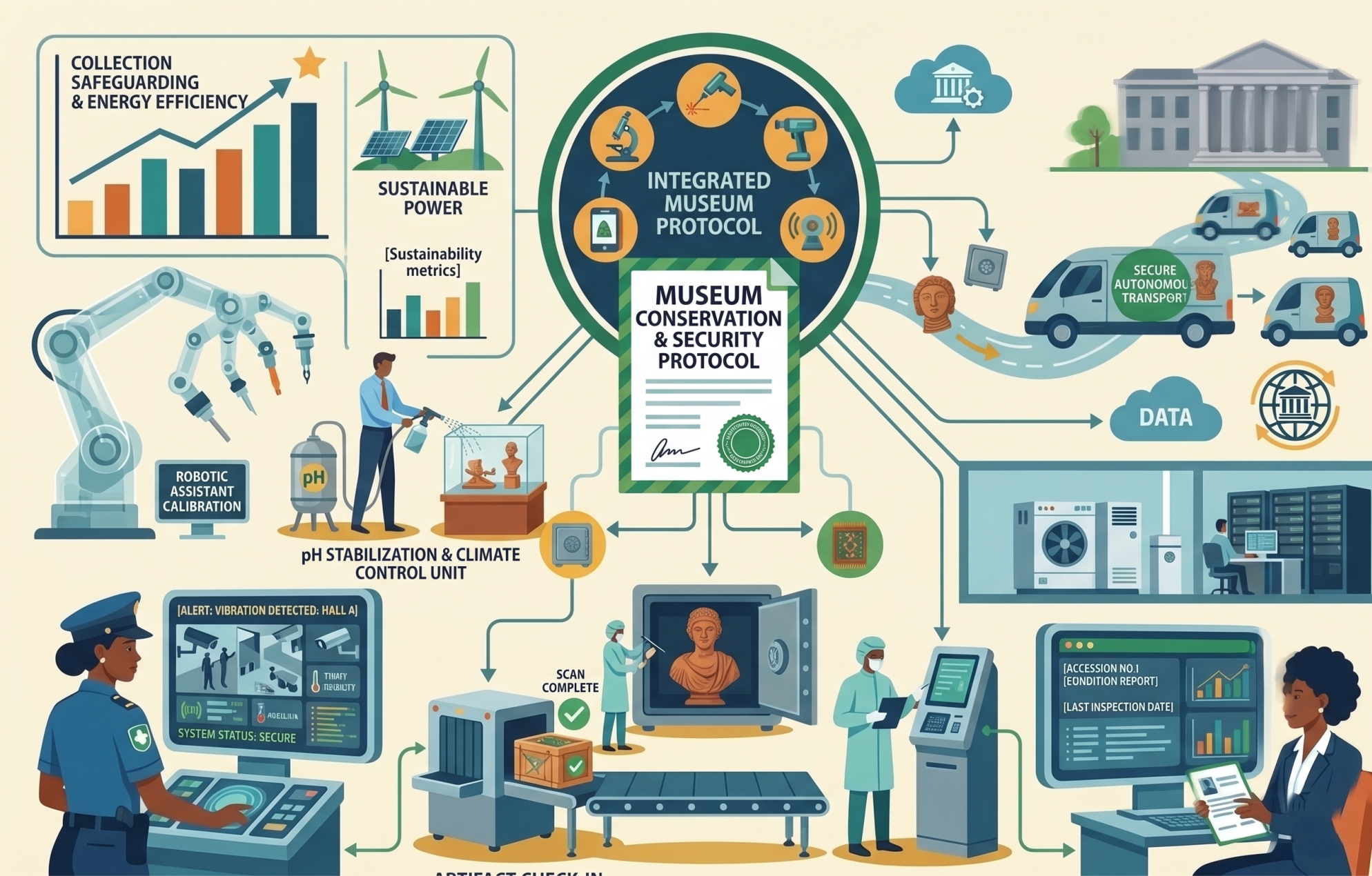
Within museum practice, conservation and security are frequently discussed as separate responsibilities. Conservation is commonly associated with preservation, environmental monitoring, restoration, storage, and the physical care of collections. Security, on the other hand, is often reduced to guards, surveillance cameras, alarms, and visitor control. In reality, however, both fields are deeply interconnected. A museum object cannot be properly conserved if it is not adequately secured, and security itself loses meaning if collections continue to deteriorate under poor environmental conditions.
This relationship between security and conservation is increasingly becoming one of the most important but least publicly understood aspects of museum management. Across Africa and many developing regions of the world, museums face growing threats that extend beyond theft alone. Climate instability, flooding, pest infestation, poor infrastructure, fire outbreaks, overcrowded storage, unstable electricity, poor documentation systems, vandalism, and inadequate handling procedures all contribute to the vulnerability of collections. In many cases, damage occurs not through dramatic criminal acts, but through slow institutional weaknesses that gradually undermine preservation efforts.
The challenge becomes even more significant because museum objects are unlike ordinary possessions. They are often irreplaceable. A stolen television can be replaced. A damaged office chair can be repaired or discarded. But a sixteenth-century ivory mask, a sacred ritual object, an archaeological bronze, or an ancestral manuscript carries historical, spiritual, artistic, and cultural meanings that cannot be reproduced once lost. When such objects disappear or deteriorate, societies lose part of their historical memory.
This reality places enormous responsibility on museums. They are not merely custodians of objects but guardians of identity, collective memory, and cultural continuity. Every exhibition gallery, storage room, conservation laboratory, and archive therefore becomes part of a larger defence system designed to preserve history against both visible and invisible threats.
Conservation and Security: Two Sides of the Same Responsibility
One of the greatest misconceptions about museum security is the assumption that protection begins and ends with physical surveillance. In reality, the first line of security often begins with preventive conservation. An object that is properly stored, documented, monitored, and handled is significantly less vulnerable to loss or deterioration. Poor storage systems create confusion, increase accidental damage, and make theft easier to conceal. Weak environmental control encourages mould growth, corrosion, cracking, and biological infestation. Inadequate documentation creates opportunities for illegal substitution, trafficking, or disappearance of objects without detection.
For this reason, modern museum practice increasingly recognizes conservation itself as a form of security. Temperature regulation, humidity control, integrated pest management, emergency preparedness, proper shelving systems, condition reporting, and digitized inventory systems are no longer viewed only as conservation procedures; they are essential protective mechanisms.
Contemporary Threats to Museum Collections
The importance of this relationship becomes clearer when examining the history of cultural loss globally. Some museum collections have disappeared through organized theft and illicit trafficking, while others have been destroyed by war, environmental disasters, fire, political instability, and institutional neglect. In several African countries, inadequate infrastructure has exposed collections to leaking roofs, fluctuating temperatures, flooding, and overcrowded storage conditions. In such environments, even the most valuable collections remain vulnerable.
The illegal trade in cultural property also continues to threaten museums worldwide. Smuggling networks often target poorly documented collections and institutions with weak security systems. Once objects enter international black markets, recovery becomes extremely difficult. African antiquities, ritual objects, sculptures, manuscripts, and archaeological materials have repeatedly appeared in foreign private collections and auction houses after disappearing from poorly protected sites and institutions.
Yet physical theft represents only one dimension of the problem. Environmental deterioration can be equally destructive. Wooden sculptures crack under unstable humidity. Metals corrode when exposed to moisture. Textiles weaken through light exposure and fluctuating environmental conditions. Paper records deteriorate through acidity, insects, and damp storage. Biological infestations silently consume organic collections over long periods before visible damage becomes apparent. In many museums, deterioration occurs gradually and quietly, making it less dramatic than theft but often far more widespread.
Preventive Conservation as the First Line of Defence
This is why preventive conservation has become central to modern heritage protection strategies. Unlike restoration, which intervenes after damage has occurred, preventive conservation focuses on reducing risk before deterioration begins. It recognizes that long-term preservation depends less on repeated repair and more on stable environments, proper planning, and continuous monitoring.
Environmental monitoring systems now play critical roles in museum security infrastructure. Temperature and humidity sensors help institutions detect dangerous fluctuations before irreversible damage occurs. Fire detection systems protect collections from catastrophic destruction. Controlled lighting reduces fading and material breakdown. Specialized storage furniture minimizes physical stress on fragile objects. Even housekeeping routines contribute to preservation by reducing dust, pollutants, and pest activity.
Infrastructure, Energy and Sustainable Collection Care
However, implementing these systems remains a major challenge for many museums, particularly within developing countries. Financial limitations often force institutions to operate with inadequate storage spaces, obsolete equipment, insufficient staffing, and weak maintenance structures. In regions with unstable electricity supply, climate control systems frequently fail, exposing collections to repeated environmental fluctuations. Generators provide temporary solutions but increase operational costs significantly.
The sustainability dilemma therefore becomes unavoidable. Museums require stable environments to protect collections, yet the energy demands of conservation systems can be financially and environmentally difficult to sustain. This tension has encouraged increasing interest in sustainable conservation approaches that rely more heavily on passive environmental control, improved building design, natural ventilation, insulation, and locally adapted storage strategies.
Traditional African architectural knowledge is increasingly being reconsidered within this context. Many indigenous building systems historically responded effectively to local climates using natural airflow, shading techniques, thick walls, courtyards, and environmentally responsive materials. Some museum professionals now argue that sustainable conservation in Africa should combine modern scientific standards with local environmental knowledge rather than relying entirely on imported conservation models designed for different climatic realities.
Technology and Digital Security in Museum Management
At the same time, technology is reshaping museum security in important ways. Digital cataloguing systems, barcode tracking, RFID technology, high-resolution photography, and 3D documentation are improving collection accountability and monitoring. Digitization not only preserves information about objects but also strengthens security by creating detailed identification records that assist in recovery if theft occurs.
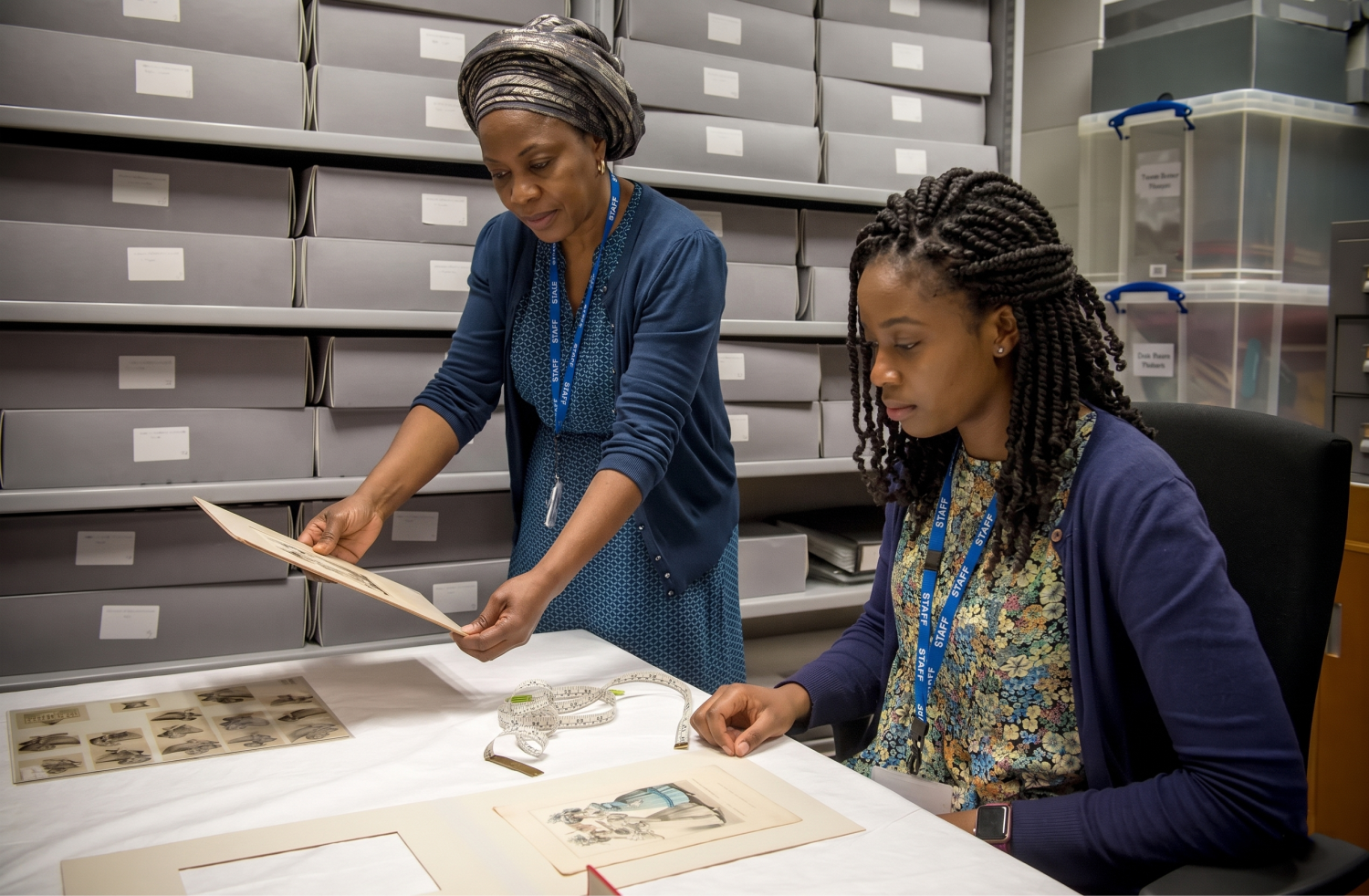
The role of documentation in museum security cannot be overstated. An undocumented object is vulnerable not only to deterioration but to disappearance. Accurate inventory systems allow institutions to track movement, assess condition changes, detect missing items, and maintain accountability across departments. In many heritage theft investigations worldwide, recovery efforts have depended heavily on photographic records and detailed cataloguing.
Human Capacity and Professional Competence
Human factors remain equally important. Security personnel, conservators, curators, registrars, technicians, cleaners, and exhibition staff all contribute to collection protection. In some cases, insider negligence or inadequate training creates vulnerabilities more dangerous than external threats. Mishandling during transportation, poor packing procedures, accidental exposure to environmental hazards, and improper storage can cause severe damage without malicious intent.
Training therefore becomes essential. Museum personnel must understand not only how to secure collections physically but also how environmental conditions, handling methods, and institutional procedures affect long-term preservation. Security in museums is no longer limited to policing spaces; it involves risk management, environmental awareness, emergency preparedness, and interdisciplinary collaboration.
Disaster Preparedness and Emergency Response
Emergency planning has become especially important in recent years due to climate-related disasters. Flooding, storms, heatwaves, and fire outbreaks increasingly threaten heritage institutions worldwide. Many museums now develop disaster preparedness plans that include evacuation procedures, emergency freezing of wet materials, salvage priorities, backup documentation systems, and staff response training.
Unfortunately, many African museums still lack comprehensive disaster preparedness frameworks despite increasing environmental risks. Collections remain exposed to seasonal flooding, deteriorating infrastructure, and inadequate emergency response systems. This situation highlights the urgent need for stronger government investment in heritage protection infrastructure.
Public Engagement and Heritage Stewardship
Public awareness also plays a critical role in museum security and conservation. Heritage protection cannot remain solely an institutional responsibility. Communities that understand the significance of museum collections are more likely to support preservation initiatives, resist illicit trafficking, and advocate for better funding and policy support. Public engagement transforms museums from isolated institutions into shared cultural responsibilities.
Educational outreach therefore becomes part of preservation itself. When visitors understand why flash photography is restricted, why touching objects is prohibited, or why environmental control matters, they become participants in conservation rather than passive observers. Public understanding strengthens institutional protection.
Repatriation and Shared Responsibility
Equally important is the growing conversation surrounding repatriation and the return of African cultural objects from foreign institutions. As restitution debates continue internationally, questions surrounding conservation infrastructure and museum security within receiving institutions increasingly emerge. Some foreign institutions raise concerns about storage conditions, environmental control, and protection capacity within African museums.
While such concerns should not be used to justify indefinite retention of African heritage abroad, they nevertheless highlight the importance of strengthening conservation infrastructure locally. Repatriation must therefore be accompanied by investment in conservation training, storage facilities, environmental systems, and museum security development. Heritage return without preservation capacity risks exposing vulnerable objects to new forms of deterioration.
Building Resilient Museums for the Future
Despite these challenges, museum professionals across Africa continue to demonstrate remarkable resilience and innovation. Conservators adapt locally available materials for storage and stabilization. Curators improve documentation systems despite limited resources. Technicians maintain outdated environmental systems under difficult conditions. Security staff protect collections with inadequate equipment and staffing. These efforts, though often invisible to the public, form the quiet foundation upon which heritage survival depends.
Ultimately, the relationship between conservation and security reflects a broader truth about museums themselves. Preservation is not simply about objects; it is about continuity. Museums protect evidence of who societies were, how they evolved, what they believed, and what they created. Every object carries stories of craftsmanship, ritual, governance, memory, conflict, identity, and human imagination. To protect such objects requires more than walls, cameras, and alarms. It requires environmental stability, documentation, professional training, sustainable planning, institutional commitment, and public support.
Conclusion
Security without conservation becomes temporary protection. Conservation without security becomes vulnerable preservation. The future of heritage protection therefore depends on recognizing both as inseparable responsibilities. Because when museums fail to protect collections, the loss extends beyond physical materials. What disappears is part of a society’s memory itself. And once memory disappears, rebuilding identity becomes far more difficult than preserving it in the first place.
References
Ambrose, T., & Paine, C. (2018). Museum Basics (4th Edition). Routledge, London.
Canadian Conservation Institute (CCI). (2023). Agents of Deterioration and Preventive Conservation. Government of Canada.
ICCROM. (2011). Reducing Risks to Cultural Heritage. International Centre for the Study of the Preservation and Restoration of Cultural Property, Rome.
ICOM. (2017). ICOM Code of Ethics for Museums. International Council of Museums, Paris.
Keene, S. (2005). Fragments of the World: Uses of Museum Collections. Elsevier Butterworth-Heinemann, Oxford.
National Commission for Museums and Monuments (NCMM). (2023). Museum Management, Collection Care and Heritage Preservation in Nigeria. Abuja, Nigeria.
Pye, E. (Ed.). (2001). Caring for the Past: Issues in Conservation for Archaeology and Museums. James & James Science Publishers, London.
UNESCO. (1970). Convention on the Means of Prohibiting and Preventing the Illicit Import, Export and Transfer of Ownership of Cultural Property. Paris.
UNESCO. (2015). Recommendation Concerning the Protection and Promotion of Museums and Collections. Paris.
Waller, R. (2003). Cultural Property Risk Analysis Model: Development and Application to Preventive Conservation. Canadian Museum of Nature, Ottawa.
About the Authors
Nwaokobia is a Conservator and Researcher at the National Museum, Lagos. She is actively engaged in the preservation of cultural heritage, with research interests in preventive conservation, museum collection management, digitization, and sustainable heritage preservation.
Okolie is a Conservator at the National Museum, Lagos. Her professional work centres on the conservation, documentation, and preventive care of museum collections, with a commitment to promoting best practices in heritage preservation.
Ayodele is an antiquity protection professional with National Museum, Lagos. He specializes in cultural property protection, museum security, heritage law enforcement, and the prevention of illicit trafficking in cultural objects.
-
-
Preserving the Past, Securing the Future: The Imperative for Modernizing Museum Collection Documentation in Nigeria
-
Written by Chidiebere Ojogho & Ihuoma Jennifer Metuaghan
October 20, 2025 | 5.46 UTC+0
Introduction
Nigeria stands as the custodian of one of the world’s most vital, prolific, and historically significant cultural landscapes. From the delicate terracotta of the Nok culture and the technical mastery of Ife and Owo arts to the world-renowned masterpieces of the Benin Kingdom, the country’s museums hold objects that redefined global art history. Yet, a museum is only as resilient as its archives. Without comprehensive, airtight, and accessible documentation, these invaluable collections risk being lost to history, obscured by systemic disorganization, or left dangerously vulnerable to exploitation.
To definitively safeguard its material history, Nigeria’s cultural sector must execute a coordinated, structural transformation, transitioning from vulnerable manual record-keeping to robust, unified, and community-informed digital documentation systems.
The Operational Vulnerabilities of Legacy Systems
For decades, institutions under the National Commission for Museums and Monuments (NCMM) alongside university repositories have relied primarily on manual, paper-based entry ledgers. While these legacy ledgers served as the foundational bedrock of early post-independence curatorial work, they present acute vulnerabilities in a modern museum ecosystem.
Physical registers face steady, inevitable deterioration due to harsh tropical climates, fluctuating humidity, and accidental physical damage. More critically, decentralized paper systems create crippling data silos. A researcher or curator at the National Museum in Lagos cannot easily verify if a corresponding artifact, a related fragment, or missing provenance data exists at the National Museum in Kaduna without physical travel or slow, manual inquiries. This lack of centralized, real-time tracking creates systemic gaps that complicate collection management, stymie internal audits, and leave collections exposed to security vulnerabilities.
A Strategic Framework for Modernization
Improving documentation is not an administrative afterthought; it is the core engine of museum security, research, and national pride. True modernization relies on three non-negotiable strategic pillars:
1. Unified Digital Infrastructure and Metadata Standards
The paradigm shift from analogue to digital must be accelerated. True digitization extends far beyond merely photographing an object; it requires a meticulous process where every single artifact is assigned a non-repeating, permanent accession number tied to high-resolution imaging or 3D scans.
Crucially, these images must be bound to standardized metadata schemas (such as Object ID or Dublin Core) adapted to capture African art structures. This includes tracking historical context, material composition, precise physical dimensions, and exact origin. Digital twins and centralized databases serve as permanent historical insurance, ensuring that if a physical object suffers damage or environmental degradation, its complete historical and visual record remains fully intact.
2. The Legal Weapon of Provenance in International Restitution
In the current era of global heritage management, the restitution of African cultural heritage has shifted from a theoretical debate to an active, legal process. The successful return of stolen artifacts from global institutions relies entirely on irrefutable, ironclad provenance data.
Detailed internal museum records provide the exact paper trails required to trace, identify, and legally claim ownership of looted antiquities on the international stage. Furthermore, robust internal documentation acts as a vital shield against ongoing illicit trafficking. When a nation maintains an airtight, digitized national registry, it becomes virtually impossible for black-market items to be laundered into international collections or pass the rigorous compliance standards of modern global auction houses.
3. Integrating Community Led Intangible Heritage
A unique, irreplaceable strength of Nigerian museum management is its proximity to living cultural communities. Modern documentation must reject sterile, purely colonial Western cataloguing models that describe an item simply as “bronze casting, 14th century.”
By actively involving local communities, traditional rulers, and indigenous historians in the cataloguing process, museums can capture the intangible heritage inextricably linked to the object. This means documenting its ritual uses, oral histories, indigenous terminology, and deep spiritual significance. This inclusive methodology transforms cold database entries into rich, living educational narratives, preserving the true identity of the culture along with the physical object.
Overcoming Infrastructure and Capacity Bottlenecks
Implementing an improved documentation system across Nigeria’s vast network of national and private museums requires confronting infrastructure hurdles with practical, localized engineering. The most pressing obstacle is the country’s unpredictable electrical grid and varying internet bandwidth. To counter this, digital collection management systems (CMS) must be deployed using hybrid architectures—operating seamlessly on offline local area networks (LANs) within the museums, and syncing securely to cloud servers during windows of stable connectivity.
Technology is only as effective as the human capital operating it. Continuous, institutionalized capacity-building workshops are required to train a new generation of museum curators, registrars, and IT specialists in database management, digital preservation, and metadata archiving. Funding allocations must pivot to treat documentation as a high priority national security asset. By securing the data of the past, Nigeria ensures its cultural voice remains definitive, undeniable, and entirely self-governed for generations to come.
-
-
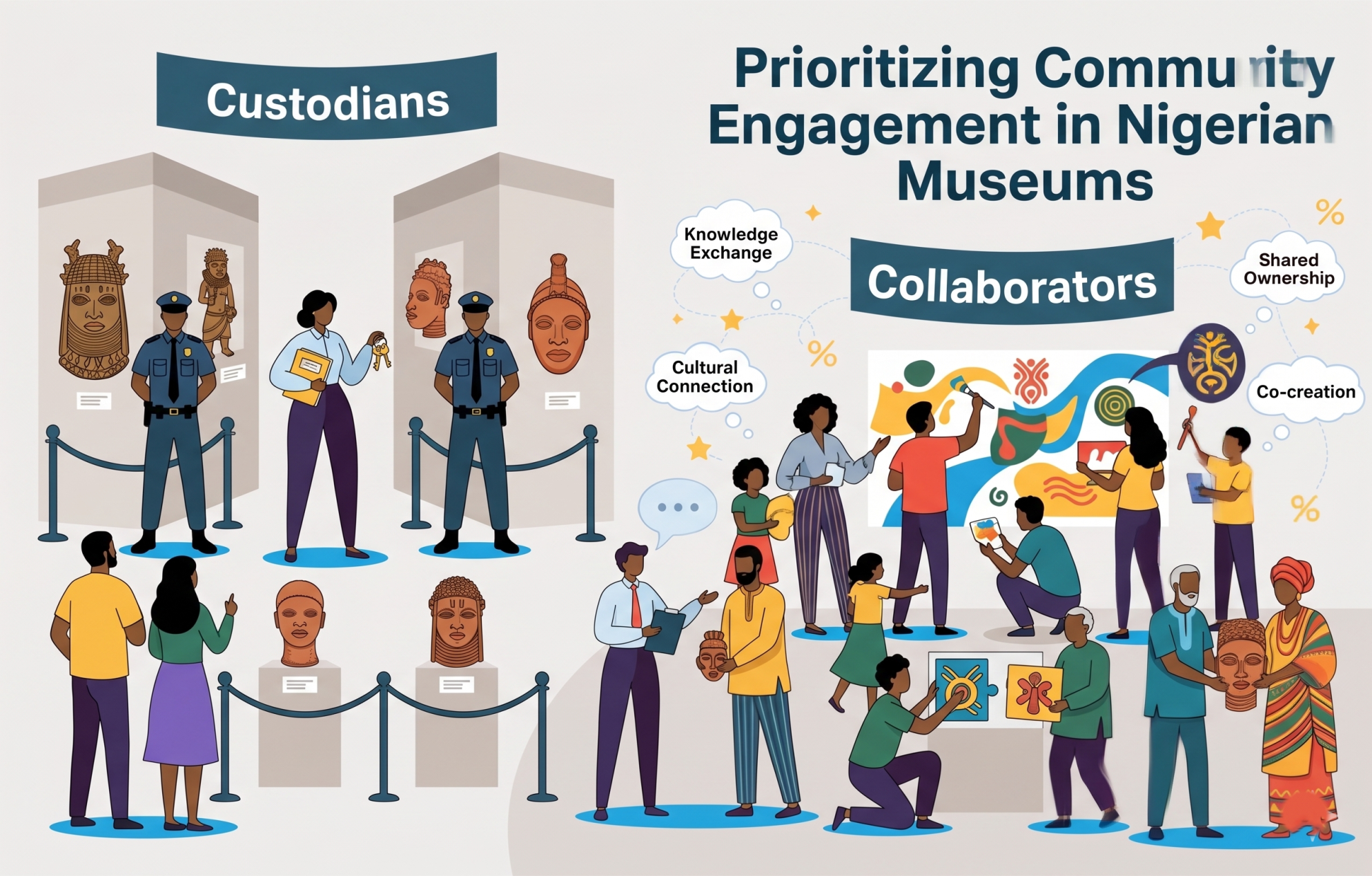
From Custodians to Collaborators: Prioritizing Community Engagement in Nigerian Museums
-
Written by Ihuoma Jennifer Metuaghan
September 20, 2025 | 10:55 pm UTC+0
Introduction
For generations, the traditional museum model in Nigeria has functioned primarily as a somber vault of the past. Visitors walked through quiet, dimly lit corridors of institutions managed by the National Commission for Museums and Monuments (NCMM), viewing sacred carvings, royal regalia, and ancient terra-cottas separated by thick panes of glass. In this legacy framework, the museum acted as an absolute authority—a distant custodian of a culture that felt detached from the vibrant, chaotic, and living realities of the communities right outside its gates.
However, a profound shift is occurring. Driven by a global push toward cultural repatriation, grassroots advocacy, and initiatives like the international Museums Lab network, Nigerian museums are undergoing a major evolution. True preservation is no longer seen as merely keeping artifacts behind glass; it requires actively weaving those artifacts back into the social fabric of the people who created them. Prioritizing community engagement is no longer just a progressive curatorial choice—it is a vital requirement to keep Nigeria’s heritage alive, democratic, and relevant.
Dismantling the Colonial Monologue
To understand why community engagement is so vital, one must look at the origin of modern museums in West Africa. Many were established during the colonial era to collect, classify, and isolate material culture, often stripping objects of their spiritual, utilitarian, and social contexts. When a sacred staff or a communal festival mask is permanently locked in a case with a cold, clinical label, its living story is paused.
By centering local communities, Nigerian museums are transforming from top-down lecturers into open spaces for dialogue. This means involving local rulers, youth groups, guild craftsmen, and elders in determining how stories are told.
A museum should not tell a community who they are; it should provide the canvas for the community to articulate their own identity.
When the public is invited to co-curate exhibitions, share oral histories, and challenge historical narratives, the museum stops being a foreign concept and becomes a true civic sanctuary.
Activating Intangible Heritage
The material treasures housed across Nigeria’s 53 national museums are only half of the country’s cultural wealth. The other, arguably more fragile half, is its intangible heritage: oral folklore, traditional performance, artisanal techniques, indigenous medicine, and linguistic dialects. These cannot be preserved in a climate-controlled display box; they can only survive through active human practice.
Community-centered museums act as vital catalysts for this continuity. By partnering with local cultural practitioners, museums can host live workshops where:
- Master bronze casters and beadwork artists pass ancestral techniques directly down to the youth.
- Elders lead oral storytelling sessions, capturing histories that have never been written into textbooks.
- Traditional musicians and masquerade performers use museum grounds for seasonal festivals, reconnecting physical artifacts with their intended kinetic movement and sound.
By shifting the focus from static objects to living practices, the museum becomes an active workspace that protects dying traditions from being lost to rapid urbanization.
Fostering Social Cohesion and Healing
In a multi-ethnic nation like Nigeria, cultural spaces carry immense potential to build bridges and heal historical fractures. A museum that actively engages its local community can serve as a neutral ground to foster empathy and shared understanding across generations and ethnicities.
Recent collaborative projects, such as community archaeology initiatives in ancient historical centers like Benin City, show the power of inclusive programming. By inviting school children, local laborers, and neighborhood families to participate in excavations, view discoveries in real time, and debate their meanings, the museum sparks a deep sense of collective ownership. When a diverse community feels that a museum reflects their shared struggles, triumphs, and complexities, the institution transforms into a powerful anchor for social unity and civic pride.
Securing the Future: Youth and the Digital Era
With over 60% of Nigeria’s population under the age of 25, museums face a critical ultimatum: adapt to the youth or face obsolescence. The modern generation of young Nigerians is hyper-connected, entrepreneurial, and fiercely creative, yet often alienated by traditional cultural institutions.
Prioritizing engagement means meeting the youth where they are. Forward-thinking institutions, such as the Yemisi Shyllon Museum of Art, are successfully piloting interactive public programs, creative residencies, and student-led gallery tours. Furthermore, integrating community engagement with digital spaces—like the NCMM’s digital museum platforms—allows young digital creators, graphic designers, and tech enthusiasts to remix historical motifs into modern fashion, film, and digital art. When young people see the museum as a collaborative incubator rather than a stagnant graveyard of relics, they naturally step forward as the next generation of cultural protectors.
Conclusion
The true measure of a successful museum is not found in the number of priceless objects resting in its vaults, but in the depth of its relationship with the people outside its walls. As Nigeria continues to welcome back repatriated treasures from around the globe, the physical and philosophical infrastructure must be ready to receive them—not just as secure storage spaces, but as welcoming community hubs. By aggressively prioritizing local engagement, Nigerian museums will firmly establish themselves as living institutions: spaces where memory inspires creation, history fuels dialogue, and a great heritage actively builds a greater future.
-
-

International Grants and Funding Models for Nigerian Museum Digitization
-
Written by Chidiebere Ojogho & Ihuoma Jennifer Metuaghan
August 27, 2025 |6:36 pm UTC+0
Introduction
As the global heritage sector increasingly recognizes the importance of digital preservation, securing financing for large-scale collection documentation projects has shifted from local budgetary allocations to sophisticated, multi-layered international funding models. For Nigerian cultural institutions—including national museums under the National Commission for Museums and Monuments (NCMM), university repositories, and private archives—transforming physical legledgers into centralized digital databases requires significant capital.
Fortunately, a robust framework of bilateral grants, philanthropic foundations, open-access initiatives, and corporate-cultural partnerships exists to back these vital efforts.
Major International Grant Pathways
Navigating global cultural funds requires aligning museum documentation needs with the specific mandates of international grantors. Several key institutional programs actively finance West African archiving and digitization initiatives.
The U.S. Ambassadors Fund for Cultural Preservation (AFCP)
Administered by the U.S. Department of State through the U.S. Mission to Nigeria, the AFCP is one of the most prominent sources of direct funding for Nigerian heritage. It awards grants ranging from $25,000 to $500,000.
- The Digitization Focus: The AFCP explicitly prioritizes inventory creation and digital documentation as methods to protect collections from theft, natural disasters, and structural deterioration.
- Strategic Precedent: This fund previously backed critical interventions like the “RE-ORG Nigeria” program in collaboration with ICCROM and Ahmadu Bello University, which stabilized collections in storage and digitized corresponding inventory data at major hubs like the National Museum of Jos.
The Endangered Material Knowledge Programme (EMKP)
Hosted by the British Museum and supported by philanthropic funds, the EMKP offers specialized Legacy Digitisation Grants of up to £20,000 for 12-month periods.
- The Digitization Focus: This fund targets fragile, legacy archives—including fieldnotes, handwritten registries, negatives, and historical documentation—that record at-risk material culture or traditional practices.
- The Mandate: Funded projects must generate high-quality digital assets using standardized metadata, preserve the physical originals, retain copies within a local host institution in Nigeria, and deposit the data into an open-access repository.
UNESCO’s Heritage Emergency Fund (HEF) and Quick-Response Funds
UNESCO’s emergency funding frameworks focus heavily on protecting cultural assets from civil crises, environmental degradation, and conflict. Recent phases implemented through partnerships with the NCMM emphasize capacity building for museum personnel in emergency risk mitigation, where creating digital inventories serves as the ultimate insurance policy against the physical loss of cultural property.
Alternative Funding and Partnership Models
While traditional grants offer direct capital injection, long-term sustainability often relies on blended financing models and technical partnerships.
Corporate Social Responsibility (CSR) and Tech Partnerships
A rising trend in Nigeria involves local and multinational corporations funding digital cultural infrastructure through CSR channels. A prominent example is the NCMM’s strategic partnership with infrastructure giants like IHS Towers to establish digital museum footprints and modernize collection presentation. These models typically see tech entities providing the physical hardware, server space, or broadband infrastructure, while museum professionals manage the curatorial data.
Bilateral Restitution and Transnational Research Funds
The ongoing return of artifacts, such as the Benin Bronzes from Germany, Great Britain, and the Netherlands, has catalyzed dedicated funding pipelines. European governments and universities frequently anchor restitution agreements with joint research funding. These funds are specifically earmarked for provenancing and digitizing existing collections, creating shared digital platforms that reconnect scattered historical materials between European and Nigerian institutions.
Essential Structural Requirements for Successful Funding
International grant bodies operate under rigid compliance frameworks. To successfully capture these funds, Nigerian museum applications must address specific operational criteria:
1. Robust Institutional Oversight
Most international grantors require a verified host institution (such as a registered NGO, research council, or public university) to manage financial compliance. Independent researchers or grassroots archives must establish clear partnerships with these entities to guarantee accountability.
2. Digital Infrastructure Resilience
Funding bodies are highly sensitive to the risk of “digital decay.” Applications must demonstrate how digitized metadata will be stored. This requires detailed strategies for hybrid data hosting—ensuring that databases operate on local networks during power grid drops and sync to secure cloud platforms during stable connectivity windows.
3. Intellectual Property and Open Access Compliance
Modern grant models heavily emphasize global access. While original institutions retain ownership and copyright over their physical items, funding agreements (such as those with the EMKP) often stipulate that the metadata and digital images must be made accessible to the public or research communities via open-access creative commons licenses.
By pairing meticulous project planning with these targeted international funding pipelines, Nigerian cultural repositories can secure the resources necessary to build an enduring, self-governed digital record of their peerless material history.
Conclusion: Securing the Digital Vanguard
The modernization of Nigeria’s museum documentation is far more than an administrative upgrade; it is a profound act of cultural sovereignty and national preservation. Transitioning from fragile paper registers to resilient digital databases secures the physical safety of these peerless artifacts while providing the irrefutable data trails needed to navigate the complex legal landscape of international restitution.
By actively leveraging international grants like the AFCP and EMKP alongside innovative corporate partnerships, Nigerian cultural institutions can bypass traditional funding bottlenecks. Investing in robust metadata infrastructure, offline-capable networks, and community-led provenance records ensures that Nigeria doesn’t just store its past, but actively controls its historical narrative. In a rapidly evolving digital world, an airtight registry guarantees that the genius of Nigeria’s material culture remains secure, visible, and entirely self-governed for generations to come.
-
-
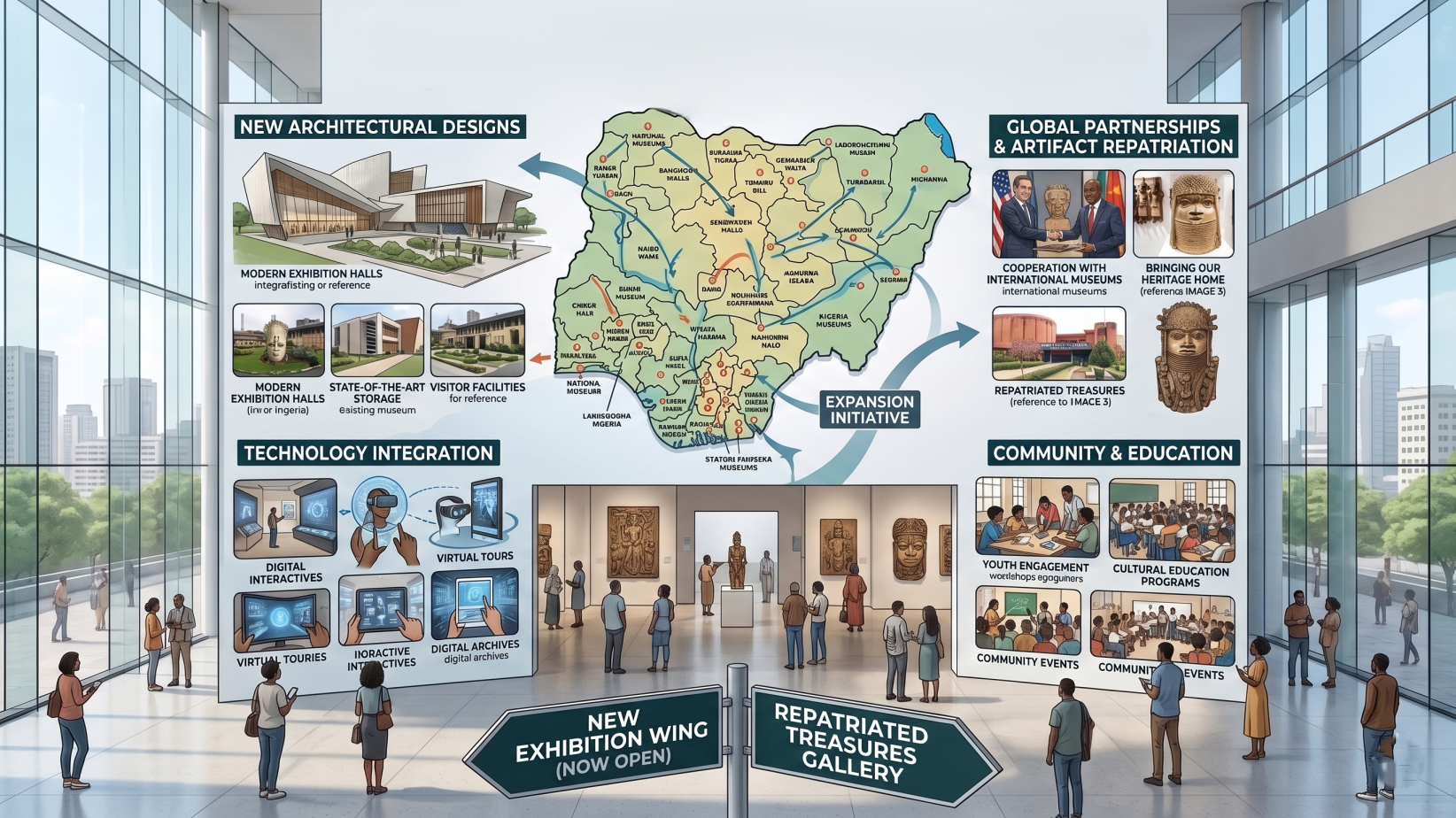
Beyond the Vaults: Expanding Exhibition Spaces Across Nigeria’s 53 National Museums
-
Written by Chidiebere Ojogho
July 7, 2025 | 10:45 pm UTC+0
Introduction
Nigeria possesses one of the world’s most prolific and historically significant repositories of material culture. From the intricate bronze castings of the Benin Kingdom and the ancient terracotta traditions of Ife and Nok, to the diverse ethnographic treasures of its over 250 ethnic groups, the nation’s material heritage is vastly deep. At the center of this cultural custody is the National Commission for Museums and Monuments (NCMM), which oversees 53 national museums and outlets spanning the length and breadth of the country.
Yet, a persistent challenge limits the impact of these institutions: the critical shortage of modernized, dynamic exhibition spaces. While the recent launch of Nigeria’s first digital museum of antiquities marks a major leap in global accessibility, it also underscores a physical irony. Tens of thousands of priceless artifacts remain secured in storage vaults, unseen by the public, due to a lack of physical gallery infrastructure capable of presenting them. For Nigeria to fully leverage its cultural assets, upgrading and expanding the physical exhibition spaces across its 53 national museums is an urgent necessity.
Unlocking the Vaults: The Right to See Our Shared History
A museum’s public galleries typically show only a small fraction of its total collection. However, in many Nigerian national museums, the disparity between what is safely preserved in the depots and what is actively displayed to the public is stark. Decades of archaeological excavations, ethnographic collections, and contemporary acquisitions have populated national reserves with phenomenal artifacts that rarely see the light of day.
The public deserves a genuine opportunity to see, touch the periphery of, and engage with these vast collections currently locked away in NCMM storage units. When a museum lacks the physical square footage to host comprehensive permanent exhibitions or rotating contemporary showcases, its narrative potential diminishes. The rich, nuanced stories of local trade networks, pre-colonial technology, and historical artistic evolutions cannot be fully told through a handful of static, decades-old displays. Expanding physical galleries means giving these silent artifacts a voice and allowing local communities to engage directly with their own historical footprints.
The Preservative Advantages of Active Exhibition
There is a common misconception that keeping artifacts packed away in storage boxes is the safest way to preserve them. In reality, moving collections out of overcrowded storage units and into modern, active exhibition spaces offers massive preservative advantages.
Deep storage environments can frequently become static microclimates where hidden pests, sudden moisture pockets, or chemical off-gassing from packing materials go unnoticed for long periods. By contrast, artifacts placed on public display are subject to rigorous, daily professional oversight. Modern galleries require:
- Constant environmental monitoring of humidity and temperature.
- Advanced, UV-filtered lighting systems designed to prevent material degradation.
- Custom-built, secure display architecture that physically stabilizes fragile objects.
Transitioning items into these state-of-the-art exhibition environments ensures that they are continuously monitored, cleaned, and protected by curators, effectively extending the lifespan of the country’s most vulnerable treasures.
Capitalizing on Cultural Assets: Revenue Generation
Museums are not merely passive storehouses; they are dynamic economic engines. Under the current federal focus on expanding Nigeria’s creative and cultural economy, the 53 national museums represent a massive, decentralized network of tourism hubs with untapped financial potential.
By investing in larger, versatile exhibition halls, NCMM stations can drastically boost their revenue generation. Expanded, world-class galleries allow museums to introduce tiered ticketing for premium or rotating international exhibitions. They also create space for high-end museum gift shops selling authentic local crafts, vibrant event rentals, and curated cafes. This increased foot traffic from domestic families, school groups, and international tourists generates vital internal revenue. These funds can then be funneled directly back into conservation efforts and staff development, making the institutions self-sustaining and less reliant on central government funding.
Igniting Research and Educational Potential
Beyond tourism and economics, the expansion of physical galleries unlocks unparalleled research and educational potential. Museums are living classrooms. For students ranging from primary schools to tertiary institutions, seeing a physical artifact creates an empirical, lasting educational impact that no textbook can match.
Larger exhibition spaces allow the NCMM to build dedicated, interactive learning zones and host rotating thematic displays that align directly with national educational curricula. Furthermore, open, well-organized exhibition spaces make collections vastly more accessible to local and international researchers, historians, and anthropologists. Instead of navigating restricted, tightly packed storage rooms, scholars can study pieces in well-lit, secure galleries, fostering new academic papers, historical discoveries, and a deeper global understanding of Nigerian civilization.
The Repatriation Imperative and Spatial Readiness
The global conversation around cultural heritage has shifted dramatically, with international institutions increasingly returning stolen and looted antiquities to Nigeria. As iconic treasures—such as the Benin Bronzes and ancient Ife Terracottas—gradually make their way back home, the question of physical reception infrastructure becomes paramount.
Returning artifacts require state-of-the-art exhibition environments. Expanding and modernizing the physical spaces within the 53 national museums ensures that every region in Nigeria is structurally equipped to receive, safeguard, and proudly exhibit its repatriated heritage.
Bridging the Physical and Digital
The recent strides in digitizing collections are highly commendable, but digital engagement should complement, not replace, the physical museum experience. The raw emotional and educational power of standing face-to-face with an object shaped by ancestors centuries ago cannot be replicated through a screen.
The future of the NCMM lies in creating hybrid cultural spaces. Expanded physical galleries can be designed from the ground up to integrate digital interactive kiosks, augmented reality elements, and immersive educational zones. This synthesis will breathe new life into the 53 national stations, making them deeply attractive to a younger, tech-savvy generation of Nigerians seeking to understand their roots.
Conclusion
The 53 national museums under the custody of the NCMM represent more than just brick-and-mortar buildings; they are custodians of Nigeria’s collective memory and global identity. Leaving vast portions of this heritage hidden away in storage units limits public enrichment, research breakthrough, and economic growth. By actively expanding and upgrading physical exhibition spaces, Nigeria can transition its museum network into a sustainable ecosystem where artifacts are better preserved, public education is elevated, and internal revenue is generated. It is time to open the vaults and allow the full brilliance of Nigeria’s material culture to step into the light.
-
-
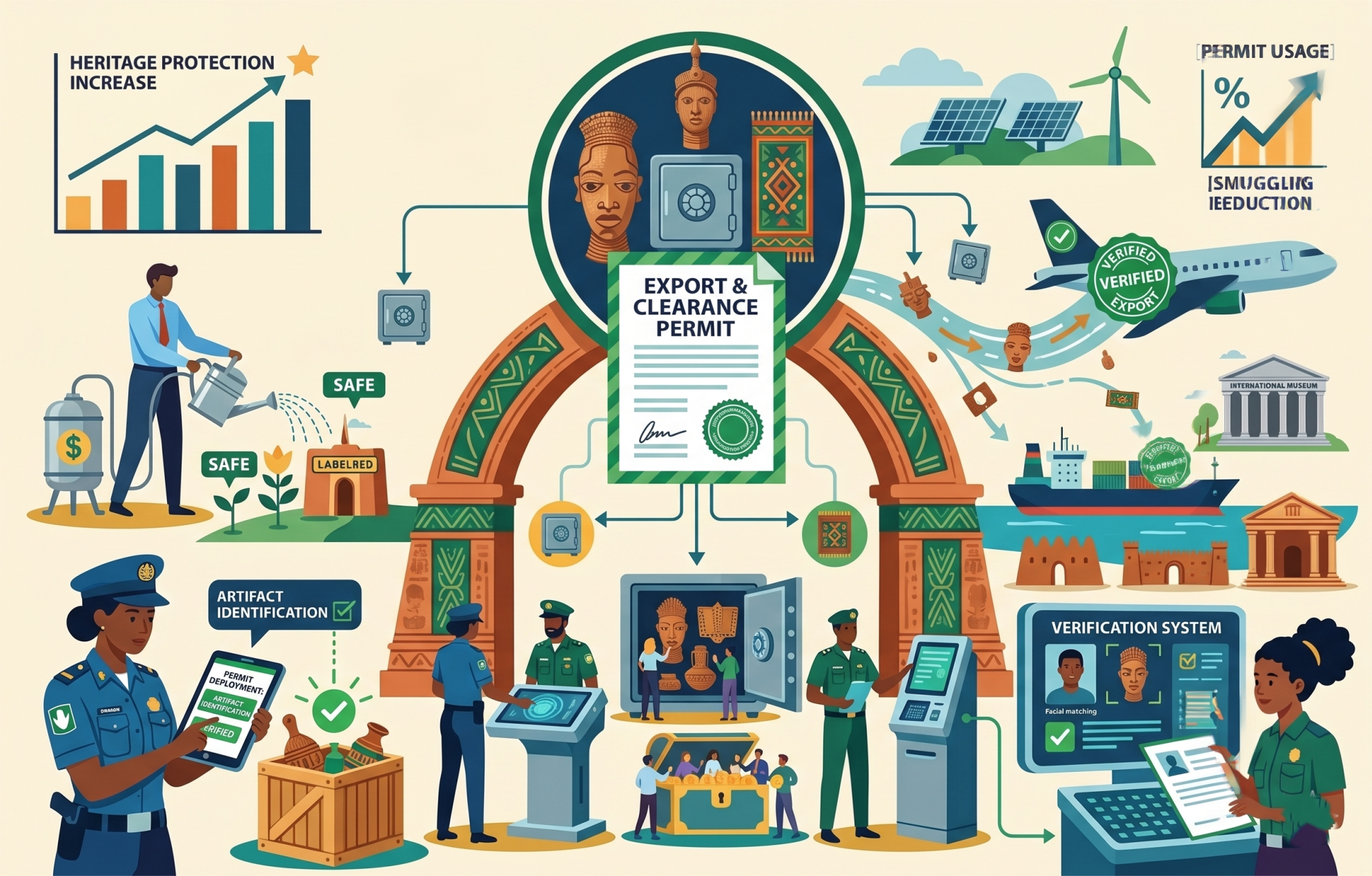
The Twin Pillars of Border Security: Deploying Export and Clearance Permits to Curb Artifact Trafficking in Nigeria
-
Written by Ihuoma Jennifer Metuaghan & Chidiebere Ojogho
March 4, 2025 | 10:17 pm UTC+0
Introduction
Nigeria’s material history is a profound testament to human ingenuity. The intricate terracotta of the Nok culture, the classical naturalism of Ife and Owo arts, the sacred soapstones of Esie, and the world-renowned bronze castings of the Benin Kingdom are more than masterworks—they are the irreplaceable bedrock of national identity. Yet, this rich cultural patrimony remains under constant siege from organized transnational trafficking networks. Driven by lucrative foreign art markets, illicit excavations and museum thefts actively strip the nation of its history.
While international treaties provide a framework for recovery after the theft has occurred, the most effective defense must happen at the borders. Within the statutory architecture of the National Commission for Museums and Monuments (NCMM) Act, two administrative instruments serve as primary, proactive mechanisms to halt illegal transit: the Export Permit and the Clearance Permit. Together, these regulatory tools create a formidable gatekeeping system that deters smugglers and secures Nigeria’s material heritage.
Deconstructing the Permitting Mechanisms
To understand how these permits function as active enforcement tools, one must differentiate their specific operational roles within Nigerian curatorial practices. They are not merely bureaucratic paperwork; they are distinct legal barriers designed to intercept different categories of material culture before they depart Nigerian soil.
The Clearance Permit: Verifying Contemporary Art and Replicas
The vast majority of objects leaving Nigeria under the label of “art” are contemporary pieces—modern paintings, sculptures, souvenirs, and replica carvings destined for the global market. However, traffickers routinely exploit this legitimate trade by intermingling genuine antiquities within crates of modern crafts.
The Clearance Permit is the NCMM’s diagnostic tool against this tactic. Any individual wishing to travel out of Nigeria with an artwork must present the physical object to an NCMM museum station for scrutiny. Curators meticulously assess the object to verify that it is indeed a contemporary production or a newly made replica. Once validated, the museum assesses a 10 percent fee based on the artwork’s value, which is paid directly into the government’s purse, and issues an official Clearance Permit. This process effectively isolates contemporary items and prevents authentic antiquities from being mislabeled as modern tourist souvenirs.
The Export Permit: Managing Temporary and Scientific Transit
Unlike a Clearance Permit, which allows contemporary art to leave permanently, an Export Permit is explicitly reserved for authentic antiquities. Under Section 25 of the NCMM Act, the permanent export of Nigerian antiquities is strictly prohibited. Therefore, an Export Permit is only granted under exceptional, temporary circumstances, such as international traveling exhibitions or specialized archaeological and scientific research.
Before this permit is signed, the applicant and the object undergo rigorous institutional investigation. The permit serves as a legal covenant, explicitly stipulating strict timeline conditions and ensuring that the object is thoroughly documented, tracked, and returned to its host museum in Nigeria upon completion of the approved timeline.
Closing the Gaps Through Inter-Agency Synergy
A permit system is only as powerful as its frontline enforcement. Because museum curators do not stand at airport tarmacs or deep-sea shipping ports, the operational success of the NCMM permitting system relies on deep synergy with Nigeria’s border control agencies.
Traffickers historically bank on border officials being unable to distinguish an authentic, ancient Ife terracotta head from a well-aged modern clay replica. To disrupt this vulnerability, the NCMM maintains a coordinated alliance with the Nigeria Customs Service, the Nigeria Immigration Service, and the National Security and Civil Defence Corps (NSCDC). Under statutory provisions, Customs officers possess special powers to search outbound cargo without a warrant if they suspect an illegal antiquity export. By training border personnel to look specifically for NCMM-issued security watermarks on Clearance and Export Permits—and to immediately detain any cultural object lacking this paperwork—the state transforms its ports of exit into impenetrable security checkpoints.
The Global Power of the Permitting System
The impact of Nigeria’s internal permit system extends far beyond its physical borders. Under the UNESCO 1970 Convention on the Means of Prohibiting and Preventing the Illicit Import, Export and Transfer of Ownership of Cultural Property, international law binds signatory nations to respect the export laws of source countries.
A landmark manifestation of this is the Cultural Property Implementation Act (CPIA) agreement signed between Nigeria and the United States. Under this bilateral pact, any archaeological or ethnological material originating from Nigeria that arrives at a U.S. border without a verified NCMM Export Permit or Clearance Permit is automatically subject to immediate seizure. The burden of proof is flipped onto the importer. Instead of Nigeria spending years wading through costly, labyrinthine foreign court battles to repatriate a smuggled object, the absence of the official Nigerian permit triggers automatic confiscation and return.
A Sovereign Defense
The rigorous implementation of Export and Clearance Permits provides an effective, localized framework for protecting Nigeria’s cultural assets. By forcing all cultural exports through a process of physical curation, verification, and inter-agency border monitoring, Nigeria aggressively disrupts black-market supply lines. These permits do not merely regulate commerce; they stand as an assertive statement of cultural sovereignty, ensuring that the material genius of Nigeria’s ancestors remains protected within the borders of the nation that created it.
Conclusion: Border Control as Heritage Preservation
The rigorous enforcement of Export and Clearance Permits represents far more than an administrative hurdle, it is a frontline imperative for national security and cultural preservation. By subjecting all outbound cultural objects to expert physical curation and verification, Nigeria systematically closes the loopholes that transnational trafficking networks have long exploited.
Furthermore, when this internal permitting system is backed by seamless inter-agency cooperation at home and reinforced by international bilateral agreements abroad, it transforms from a localized check into a globally recognized legal barrier. Ultimately, ensuring that no artifact leaves Nigerian soil without an unassailable paper trail is an assertive act of cultural sovereignty. It guarantees that the material legacy of Nigeria’s ancestors is actively defended, preserved, and kept where it truly belongs: within the borders of the nation it defines.
-
-
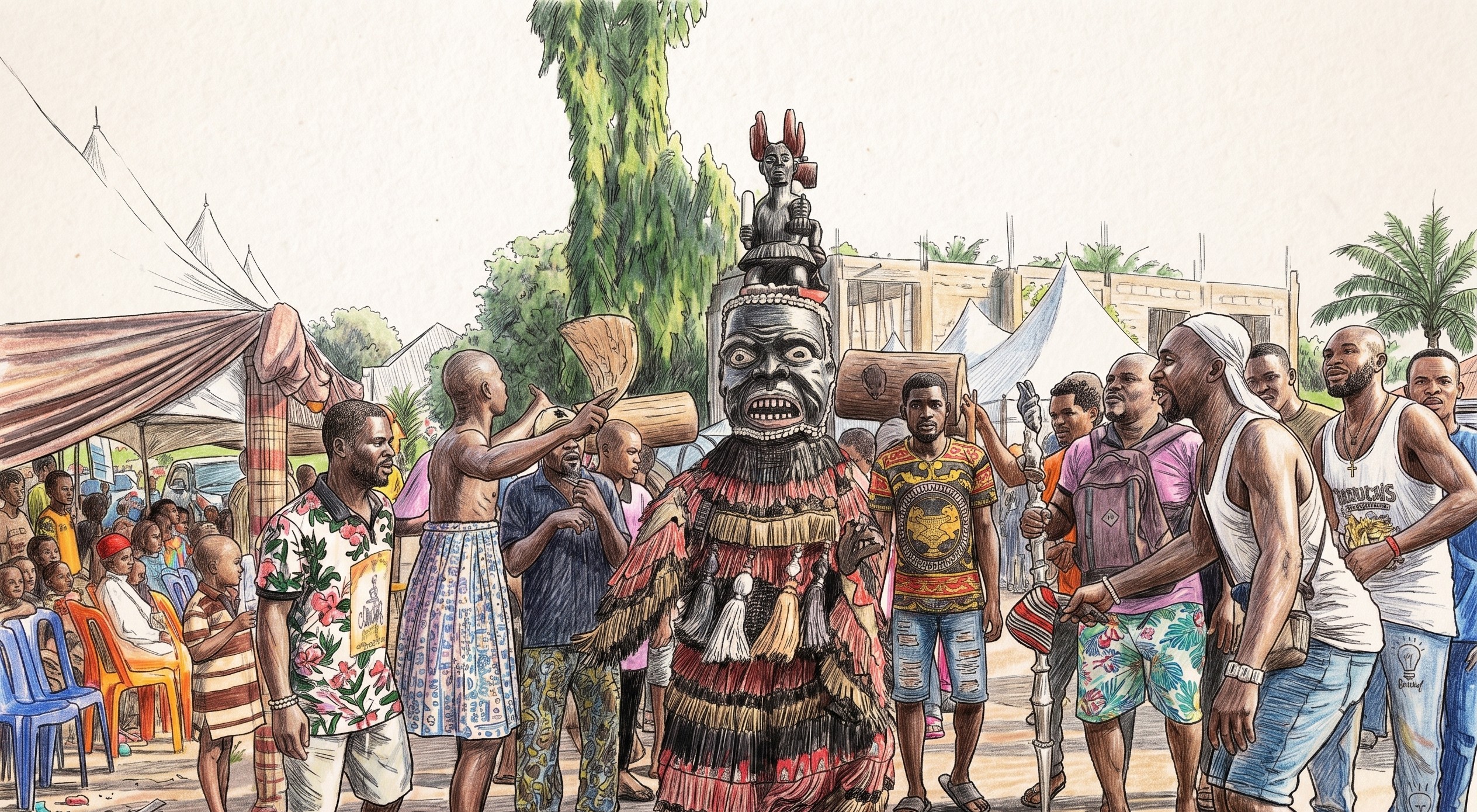
Ikeji Cultural Festival of Arondizuogu in Imo State, Nigeria
-
Written by Maduagwuna Francisca Chidili
August 12, 2024 | 9:43 pm UTC+0
Introduction
A festival is defined as a day or time of religious and other celebrations marked by feasting, ceremonies, and other observances (www.freedictionary.com).
There are different types of festivals in the world at large and in Nigeria in particular, e.g. religious, spiritual, and cultural festivals.
In Nigeria, there are the Argungu Fishing Festival in Argungu, Kebbi State; Osun-Osogbo Festival in Osun State; Afan National Festival in Southern Kaduna; New Yam Festivals celebrated in most Igbo communities; and the Ikeji Festival celebrated in Arondizuogu in Imo State. These festivals and others are celebrated in different parts of the country to commemorate certain events. Cultural festivals have always symbolized peace, reconciliation, and celebration. They are also celebrated to cherish the abundant blessings from the gods.
Cultural festivals are unique in the lives of different communities. Nothing depicts a people’s total way of life as explicitly as the celebration of a cultural festival. Within the framework of the celebration, vital components that form the worldview of the community are usually put on display through various cultural acts such as energetic dancing, music, and drumming. These celebrations are often amplified with colourful costumes, culinary delights, and lots of drinks. The Ikeji Festival of Arondizuogu is one of these festivals that has stood the test of time in Nigeria.
GEOGRAPHICAL LOCATION OF ARONDIZUOGU
Arondizuogu is located in Imo State of Nigeria. Its settlement is spread across three Local Government Areas of Imo State, namely Ideato North, Okigwe, and Onuimo. It is a large community occupying a vast expanse of land. It is presently located on land obtained from Umualaoma town (formerly Isi-Okpu). It is believed that these lands were obtained through warfare and open massacre of the people of Umualaoma and their neighbouring communities.
INTERESTING HISTORICAL SITE
There are many historical sites in Arondizuogu, but my attention is drawn to Mazi Ojike Mbonu Cottage (village of the late Boycott King), located at Ndi-Akame Uno. It is called Uno Ogologo II (Tall House II). It served as a safe house in 1887 for hiding children from being captured and sold into slavery.
ORIGIN OF THE PEOPLE OF ARONDIZUOGU
Arondizuogu is a town inhabited by the Igbo subgroup, the Aro people, in Imo State of Nigeria. The people of Arondizuogu are believed, like other Aros, to have migrated from Arochukwu in the present Abia State, Nigeria. According to history, Arondizuogu was founded through the use of force by Mazi Izuogu Mgboko and his brothers in the mid-14th century. Izuogu Mgboko was said to have been a charismatic slave merchant who came from Arochukwu to Awka in search of slaves. He was usually harboured by a friend from Umualaoma when going in search of slaves and with his goods (slaves who maintained his name even after they were freed).
Izuogu Mgboko had three sons and three brothers who gave birth to these villages, e.g. Ndiuche, Ndiawa, Ndiamazu, Ndiimoko, Ndinjoku, Ogbuonyeoma, Amankwu, Ekwuru, etc. Iheme was Izuogu’s chief servant and came from Isi-Akpu Nise near Awka. Iheme and Izuogu, his master, used all the weapons at their disposal to secure several vast areas of land that presently constitute Arondizuogu. This is the reason why the people of Arondizuogu refer to themselves as “Izuogu na Iheme.”
There was also another warrior named Okoli Idozuka. He was a great warrior and equally came from Isi-Akpu Nise near Awka. He contributed to the expansion of the boundaries of Arondizuogu. Presently, Arondizuogu is the largest among the Aro colonies.
ORIGIN OF THE IKEJI FESTIVAL
The Ikeji Festival, which takes place annually around March and April in Arondizuogu, Imo State, Nigeria, is believed to have as many as four versions.
The first version is that a warrior named Dikeji from Arondizuogu conquered a village and made it compulsory for the king to pay tribute. The tributes stopped coming after some time, which made Dikeji return to that village, behead the king, and bring his head back to his hometown, where the event was celebrated as Ikeji Ugwo.
The second version talks of an individual named Izuogu, who was the founder of Arondizuogu. He went to Arochukwu, where he was kidnapped and was fortunate to have been saved by three masked figures whom he believed must have come from Abam. Upon gaining his freedom, Izuogu held a celebration that was initially celebrated as “Ike Ji M Aka,” meaning “a strong hand is holding me.”
The third version is a bit odd, as it is connected to the slave trade. The Aro people at that time always had the omu charm to protect themselves, as they were never afraid of being captured as slaves. In a scenario where they were being captured without the omu charm, all they had to do was utter the words “Aka Ike Jim” (“a strong hand is holding me”). The slave merchant would immediately release them for fear of incurring the wrath of the famous juju of Arochukwu, a powerful deity known as Ebini-Ukpabi. Thus, the festival began as a commemoration of the Aros killed during the slave trade.
The fourth version links the festival to the New Yam Festival celebration in Arochukwu around September of every year, which is also common among the Igbos. Yam is central to the Ikeji Festival, and only men plant yam in traditional Arondizuogu society. This is why some names are derived from yam, e.g. Okparaji (son of yam), Ezeji (king of yam), Ugoji (eagle yam), Omeji (beloved yam), etc.
CELEBRATION OF IKEJI (STRENGTH OF YAM) FESTIVAL
The Ikeji Festival is celebrated in the month of March or April annually in Arondizuogu, descendants of the Arochukwu people. A similar festival is also celebrated in Arochukwu with a different name in September of every year. The cultural celebration marks both the end of the planting season and the beginning of harvesting.
The celebration is usually filled with different types of masquerades, music, and dancing. The Ikeji Cultural Festival celebration is spread across four Igbo market days, namely Eke, Orie, Afor, and Nkwo. Each of the market days has specific activities.
On the first day of the celebration, being Eke market day, the best farm produce are brought to the Eke market, where they are sold at very cheap prices.
The second day, being Orie market day, is for the slaughtering of livestock by every family.
On the third day, being Afor market day, there is feasting in every family. On the same third day, masquerades come out to display, with several dance groups joining them.
On the fourth day, being Nkwo, is the grand finale of the festival. The big masquerades (Nnekwu Mmanwu) make their appearances, dancing with regal steps and dressed in their most appreciated regalia or costumes.
Nkwo Achi is everyone’s destination, as it is the central venue of the Ikeji Festival celebration. This day is usually the most colourful, as it showcases different dance groups representing the different villages that make up the town. There is usually a lot of eating and drinking in every family before moving to the venue, Nkwo Achi, to properly witness the festival.
It is expected that everyone, both indigenes and visitors, converges at the venue to enjoy the festival as the big masquerades move around, attracting people’s attention in different ways.
Whips made from young, malleable branches of palm trees, known as mgbajara or akpata, are twisted nicely and used to flog members of different masquerade groups to test their strength in withstanding opponents and intruders. They are also used to scare opponents as they use the whips to display fetish-looking acts. Some of the masquerades and their followers are seen carrying water in baskets, which defies the laws of science.
A usual juju contest is the “Ito Ebule Ikeji”—the untying of the Ikeji ram. The juju contest, which is one of the attractions at the event, takes place at a particular spot at the venue where the act of Ito Ebule, the untying of the Ikeji ram, takes place.
Here, a big ram is tied to a tree with a tiny rope which, ordinarily, the ram could break loose from, but cannot achieve that due to some magical powers (voodoo). Among the participants or invited guests, someone is usually summoned to go and untie the ram. This can only be achieved by a man with the strongest or most powerful dibia (native doctor). He is expected to walk confidently to the ram and loosen it.
As he does this, he is confronted by spiritual attacks from other participants, aimed at preventing him from achieving his aim or even killing him. At the end of the day, whoever unties the ram wins the juju contest for that day. The winner takes the ram home for feasting with his kinsmen.
Children are not left out of the festivity, as they make small masks and sacks and wear them on their faces and bodies to attract visitors and receive small amounts of money (dash) from them.
Assorted masquerades are displayed at the festival, and some of them are Ojionu, Mgbedike, and Agbogho Mmanwu. The musical instruments used are a sight to behold, as they produce soulful sounds. They are as follows: ekwe (wooden gongs), oja (flutes), ogene (metal gongs), ichaka (beaded calabash), mgbirigba (bells), and okom (very large wooden drums).
These instruments are played together to produce enchanting traditional sounds that encourage the masquerades and dancers to bring out the best in them.
SOCIAL IMPORTANCE
In most Aro settlements, the Ikeji Festival serves to foster ties with Arochukwu and distinguish the Aro in Imo State from the indigenous people among whom they settled (Eli Briton, Cole & Aniakor, 1985).
The Ikeji Festival does not only underscore facets of the people’s past, but it also provides entertainment and relaxation after a year’s work. The Ikeji Festival symbolizes peace, reconciliation, and celebration.
Life is all about happiness, and as humans, social interaction with our fellow beings not only brings happiness but also helps us to forget our worries and celebrate the positive side of life, even if it is for a few days.
It provides an opportunity to reduce friction and bring estranged friends together. Ikeji festivals act as stress relievers and help people to balance their emotions.
The Ikeji Festival, just like other festivals, gives people the opportunity to interact with people from different tribes and places. The festival also gives the indigenes the opportunity to form relationships with visitors, and these relationships could be of great importance to both the locals and the visitors.
CULTURAL SIGNIFICANCE
It is often said that the goodness of a culture is embedded in its festivals. Cultural festivals such as Ikeji demonstrate the creativity and cultural values of the Arondizuogu people and, by extension, the Igbos of Southeastern Nigeria.
It tends to provide deeper knowledge of the life of the people.
The Ikeji Festival celebration helps the people to build community pride, especially outside the country, e.g. in the USA, where indigenes of Arondizuogu hold a minimal celebration to mark the event. By doing so, they showcase their rich culture and that of Nigeria to the outside world.
The Ikeji Festival serves as a great way to celebrate the rich culture of the people. It serves as a great way to celebrate culture and meet new people. Its celebration helps the people to learn about the culture and customs of the community.
SPIRITUAL SIGNIFICANCE
Before the commencement of the Ikeji Festival, some Aro men from Arochukwu make sacrifices in order to bridge the gap between the head of each family or the eldest man in every family and the gods.
The eldest man is entrusted with the responsibility of performing the rites of Ikeji. He invokes the spirits of the Ndichies (ancestors) through a carved symbolic sacred wood and pours libations on them while calling upon them to come and accept kolanuts.
Some men are authorized by the secret society of the Arondizuogu community to dress up as ancestral spirits in what is called masquerades. They are accompanied by a bell bearer who explains to the crowd the message from the spirit world, which usually consists of blessings for a bountiful harvest to come.
As the masquerades go through the villages, they perform rituals, killing chickens and goats to appease the gods and seek their blessings.
There are usually wooden and metal boxes which are believed to contain juju (magical powers). These are poured on some men’s heads throughout the twenty villages that make up Arondizuogu as another way of communicating with the gods.
Cleansing of the body is another ritual believed to wash away the previous farming season and prepare for the next.
ECONOMIC BENEFITS OF IKEJI FESTIVAL
Inasmuch as the Ikeji Festival enhances cultural exchange, it also provides commercial space for the community to sell their goods and products. The inflow of visitors and the mass return of indigenes to Arondizuogu during the Ikeji Festival boost the economic well-being of the people due to the huge patronage of local traders.
The hotels, beer parlours, and restaurants are not left out, as they are highly patronized by people who have come to witness the festival.
The filling stations equally make a lot of sales on petrol and diesel. The telecommunication industries are economically boosted due to huge sales of recharge cards and data, as people communicate and share the event via WhatsApp, Facebook, Instagram, etc.
The festival also holds a lot of potential for the tourism industry, as tourists are usually given a warm welcome whenever they visit to experience this rich culture.
MODERN-DAY CHALLENGES
Sophistication
The Ikeji Festival requires a lot of time to practise the traditional songs, dances, and general cultural displays. The younger generations do not have the time to do all of these, and this is really affecting the festival.
Rituals
A lot of rituals are involved, making the practice not only for fun. From its inception, people prayed to the gods and performed rituals. Presently, a lot of people are no longer interested, which has resulted in the ritual aspect of the festival becoming less prominent.
Social Media
Social media has dealt a big blow to the festival. A lot of people, rather than travelling to Arondizuogu to witness the festival, depend on social media to watch the festival.
Greener Pastures
The urge by youths to travel outside their community in search of greener pastures has negatively affected this rich cultural festival by reducing the number of men needed to wear the headdresses and face masks and to participate in the energetic dances.
Economic Situation
The economic situation has brought about a hike in transport fares on both air and road transport. This contributes to the inability of some people to travel to the village to enjoy the festival, hence causing a low turnout of people.
CONCLUSION
We are dependent on social heritage, which is a mixture of customs, attitudes, festivals, moral values, folklore, and ideas, not only to make us who we are but also to bind us together and enable us to pass these values from one generation to another.
The Ikeji Festival, having survived high levels of antagonism, has to be accepted as an intangible cultural heritage worthy of preservation.
Some of these cherished and valuable antiquities, such as different Igbo headdresses, face masks, masquerade clothing, and different types of Igbo traditional musical instruments preserved in our museums, were once used for this rich festival. Some of these items have been kept and have lasted several years in different families in Arondizuogu.
We must not allow some of these rich festivals to fade away.
REFERENCES
– www.wilkiwand.com/ikeji-festival
– m.facebook.com/posts/the-original
– punching.com/imo-community-fix
About the Author
Maduagwuna Francisca Chidili is an Assistant Chief Curator with National Museum Lagos State, Nigeria.
-