-
Written by Yinka Olajubu
June 22, 2026 | 9:31 pm UTC+0
Introduction
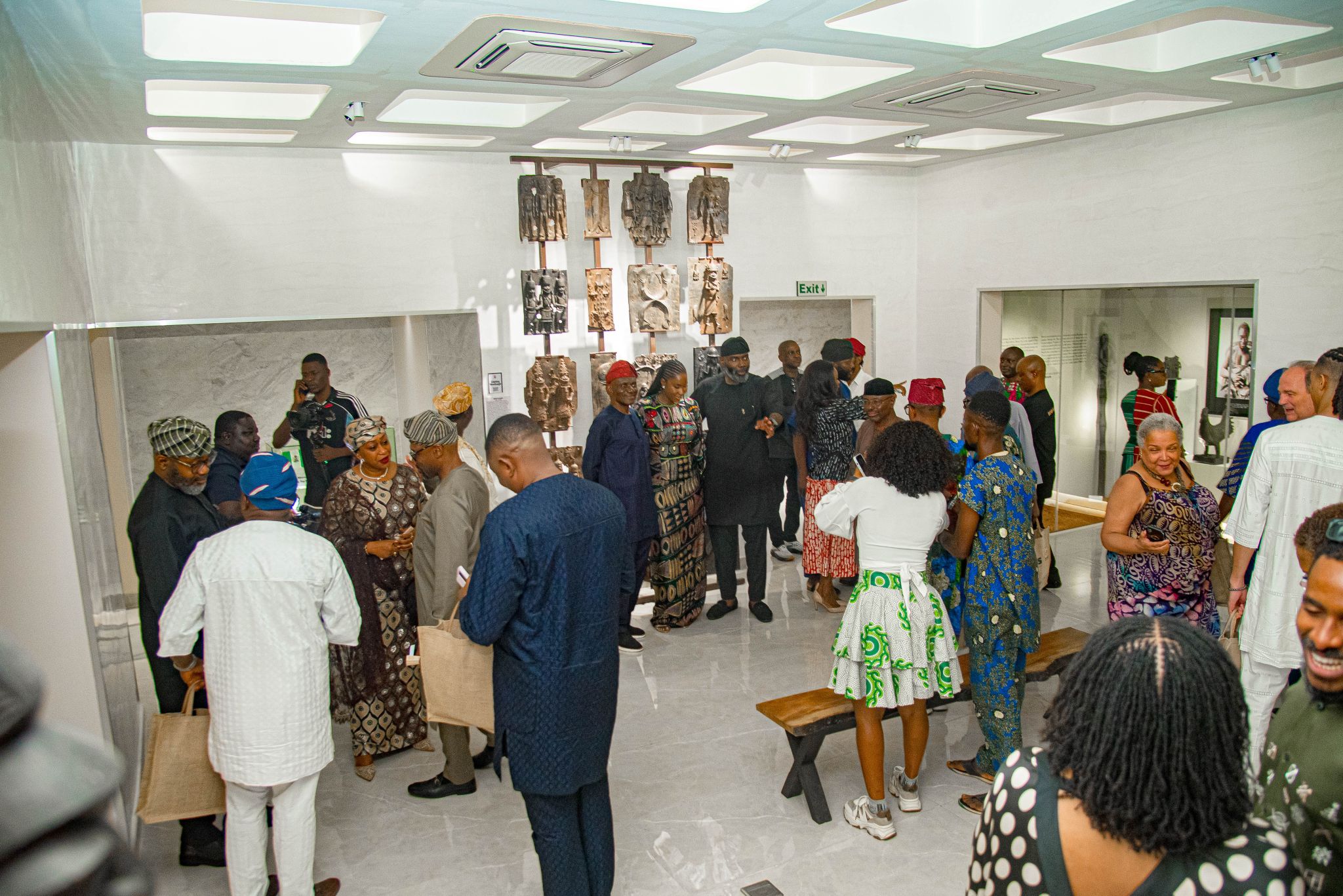
Recently, the National Museum in Lagos opened its doors to a striking new exhibition. Visitors walked through galleries that felt radically different from the past: the lighting was deliberate, the curation flowed with a captivating narrative, and the artifact arrangements felt undeniably modern. The launch was widely celebrated, but behind the scenes, the exhibition’s success revealed a complex reality. The project wasn’t funded by federal allocation; it was brought to life through a corporate partnership with IHS Nigeria.
While the National Commission for Museums and Monuments (NCMM) is a federal agency tasked with safeguarding Nigeria’s vast cultural treasury, the reality is that it must regularly source outside partnerships simply to execute its basic duties. This single, beautifully executed exhibition has provoked a profound question within the cultural sector: If a lone injection of private funding can create something this spectacular, what could Nigerian museums achieve if they were properly and consistently funded?
The Deficit of Preservation
For over half a century, the NCMM has overseen some of the most historically significant art and artifacts on the African continent. Yet, year after year, the institution has fought an uphill battle against systemic underfunding.
Museums are not merely storage units for the old and dusty; they are active, living infrastructures. They require specialized climate control to stop centuries-old wood and terracotta from decaying. They require high-level security to prevent theft, advanced digital archiving to catalogue history for future generations, and modern architectural design to make spaces inviting to the public.
When funding is treated as an afterthought, the loss is cumulative. It isn’t just about dim lighting or outdated display cases; it is about the literal degradation of irreplaceable physical history.
The Human Cost of Austerity
Perhaps the most tragic casualty of this funding deficit is not the artifacts, but the people who care for them. The NCMM possesses a remarkably rich reservoir of home-grown professionals, historians, archaeologists, conservators, curators and exhibition officers who understand the nuances of Nigeria’s heritage better than anyone else in the world.
Yet, talent cannot survive on passion alone. Decades of tight budgets have translated into stagnant wages, a lack of access to modern research tools, and fewer opportunities for international scholarly exchange. Over the years, many of Nigeria’s finest cultural minds have had to leave the institution in deep frustration.
When a seasoned exhibition officer, conservator or a brilliant young curator walks away, they take decades of institutional memory and specialized knowledge with them. Brain drain in the cultural sector is just as devastating as it is in medicine or technology. Without financial investment in human capital, we lose the gatekeepers of our story.
Moving Beyond Beg-Thy-Neighbour Culture
The success of the Lagos exhibition proves that corporate social responsibility and private partnerships are incredibly valuable. However, a national heritage strategy cannot rely entirely on philanthropy. Philanthropy is conditional, cyclical, and often tied to the marketing goals of corporations.
Adequate, structured funding from both federal allocations and dedicated cultural endowments is what transforms a museum system from a reactive survivor into a proactive cultural powerhouse. Proper funding allows for long-term planning. It means a museum can plan excavations, secure international traveling exhibitions, and invest in decades-long conservation projects without wondering if the lights will stay on next month.
Furthermore, we must reframe how we view museum funding. It is not an act of charity, nor is it a luxury expense for an idealized past. It is an economic and social investment.
The ROI of Memory
In a world where nations aggressively leverage “soft power,” museums are a country’s ultimate business card. A well-funded museum network in Nigeria is a direct catalyst for cultural tourism, drawing global travellers, researchers, and diaspora Africans seeking connection to their roots.
More importantly, museums dictate national identity. In a diverse and complex nation, museums serve as the spaces where disparate histories meet, where commonalities are discovered, and where a shared national narrative is forged. When we fund museums, we fund the mirrors in which our children see their potential.
The NCMM gave Nigerians a glimpse of what is possible at the Lagos exhibition. It proved that the vision is there, the expertise is there, and the history is undeniably there. The only missing element is the sustained financial oxygen required to let it breathe. To truly unlock Nigeria’s cultural future, we must recognize that guarding our past is well worth the price.
Conclusion
This vibrant rebirth in Lagos did not happen by accident. It required a deliberate vision to bridge the gap between bureaucratic stagnation and private-sector efficiency, a feat orchestrated by the Director-General of the NCMM. By actively courting corporate allies like IHS Nigeria, the Director-General demonstrated the precise kind of entrepreneurial leadership required to navigate the realities of modern cultural management. It was a masterclass in resourceful leadership, proving that the agency’s leadership possesses the drive to elevate Nigerian heritage to global standards.
However, the triumph in Lagos cannot remain an isolated oasis. Nigeria’s history does not begin and end in a single coastal city. The stunning artifacts of the Nok culture, the intricate bronze masterworks of Benin, the ancient monoliths of Cross River, and the rich Islamic heritage of the north all deserve the same dignity of display.
The success of the Lagos exhibition must serve as a blueprint, not a final destination. There is an urgent, undeniable need to mirror this exact model of revitalization in every corner of the country. Every state capital deserves a world-class cultural hub where its citizens can engage with their ancestry in spaces that inspire awe rather than apathy. By scaling the Director-General’s collaborative approach nationwide, Nigeria can transform its scattered, underfunded regional museums into a formidable web of national pride and economic opportunity. The fire has been lit in Lagos; it is now time to carry the torch across the entire nation.
Beyond the Lagos Exhibition: A Blueprint for Revitalizing Nigeria’s Regional Museums