-
Written by Chidiebere Ojogho
July 7, 2025 | 10:45 pm UTC+0
Introduction
Nigeria possesses one of the world’s most prolific and historically significant repositories of material culture. From the intricate bronze castings of the Benin Kingdom and the ancient terracotta traditions of Ife and Nok, to the diverse ethnographic treasures of its over 250 ethnic groups, the nation’s material heritage is vastly deep. At the center of this cultural custody is the National Commission for Museums and Monuments (NCMM), which oversees 53 national museums and outlets spanning the length and breadth of the country.
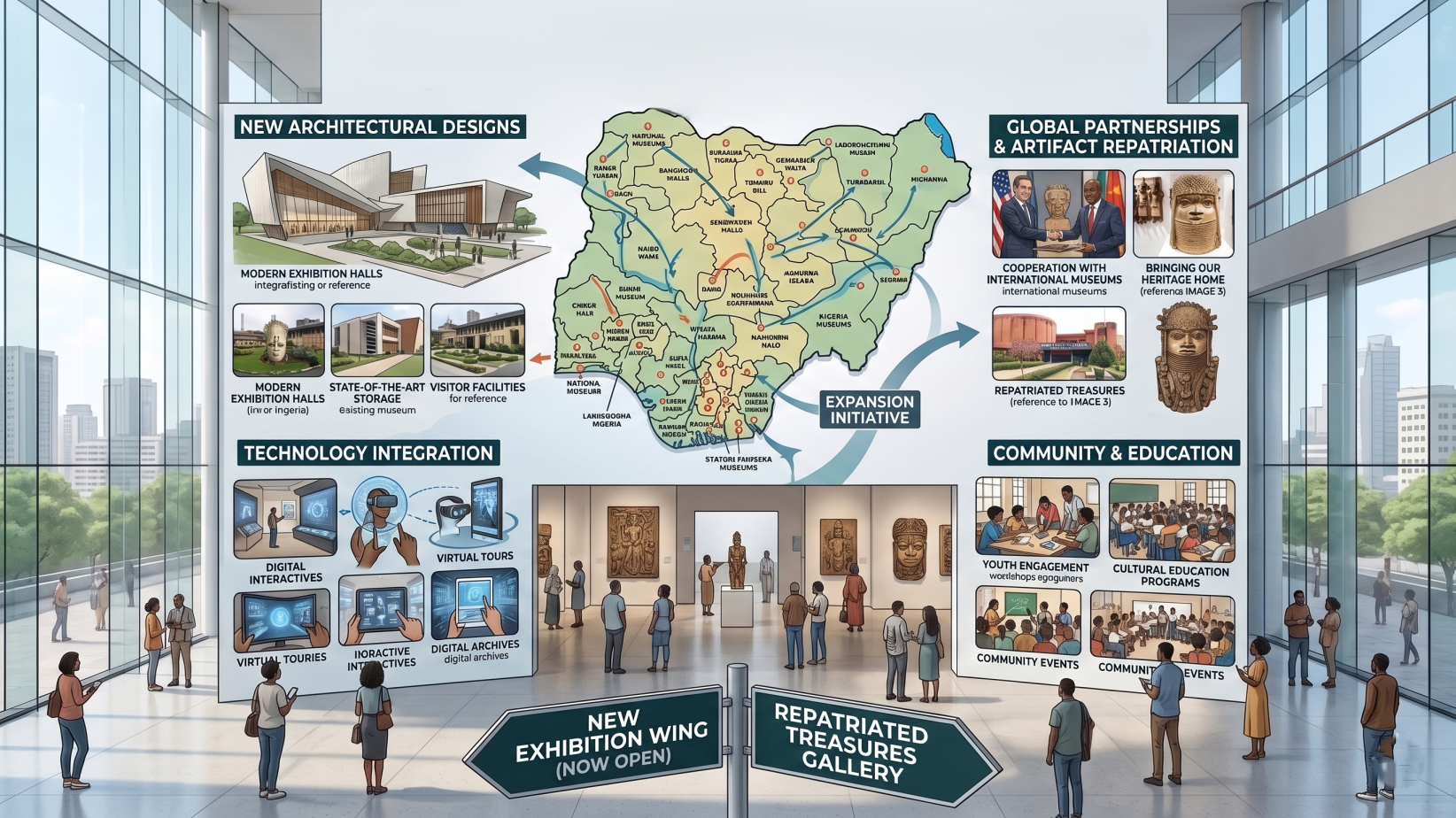
Yet, a persistent challenge limits the impact of these institutions: the critical shortage of modernized, dynamic exhibition spaces. While the recent launch of Nigeria’s first digital museum of antiquities marks a major leap in global accessibility, it also underscores a physical irony. Tens of thousands of priceless artifacts remain secured in storage vaults, unseen by the public, due to a lack of physical gallery infrastructure capable of presenting them. For Nigeria to fully leverage its cultural assets, upgrading and expanding the physical exhibition spaces across its 53 national museums is an urgent necessity.
Unlocking the Vaults: The Right to See Our Shared History
A museum’s public galleries typically show only a small fraction of its total collection. However, in many Nigerian national museums, the disparity between what is safely preserved in the depots and what is actively displayed to the public is stark. Decades of archaeological excavations, ethnographic collections, and contemporary acquisitions have populated national reserves with phenomenal artifacts that rarely see the light of day.
The public deserves a genuine opportunity to see, touch the periphery of, and engage with these vast collections currently locked away in NCMM storage units. When a museum lacks the physical square footage to host comprehensive permanent exhibitions or rotating contemporary showcases, its narrative potential diminishes. The rich, nuanced stories of local trade networks, pre-colonial technology, and historical artistic evolutions cannot be fully told through a handful of static, decades-old displays. Expanding physical galleries means giving these silent artifacts a voice and allowing local communities to engage directly with their own historical footprints.
The Preservative Advantages of Active Exhibition
There is a common misconception that keeping artifacts packed away in storage boxes is the safest way to preserve them. In reality, moving collections out of overcrowded storage units and into modern, active exhibition spaces offers massive preservative advantages.
Deep storage environments can frequently become static microclimates where hidden pests, sudden moisture pockets, or chemical off-gassing from packing materials go unnoticed for long periods. By contrast, artifacts placed on public display are subject to rigorous, daily professional oversight. Modern galleries require:
- Constant environmental monitoring of humidity and temperature.
- Advanced, UV-filtered lighting systems designed to prevent material degradation.
- Custom-built, secure display architecture that physically stabilizes fragile objects.
Transitioning items into these state-of-the-art exhibition environments ensures that they are continuously monitored, cleaned, and protected by curators, effectively extending the lifespan of the country’s most vulnerable treasures.
Capitalizing on Cultural Assets: Revenue Generation
Museums are not merely passive storehouses; they are dynamic economic engines. Under the current federal focus on expanding Nigeria’s creative and cultural economy, the 53 national museums represent a massive, decentralized network of tourism hubs with untapped financial potential.
By investing in larger, versatile exhibition halls, NCMM stations can drastically boost their revenue generation. Expanded, world-class galleries allow museums to introduce tiered ticketing for premium or rotating international exhibitions. They also create space for high-end museum gift shops selling authentic local crafts, vibrant event rentals, and curated cafes. This increased foot traffic from domestic families, school groups, and international tourists generates vital internal revenue. These funds can then be funneled directly back into conservation efforts and staff development, making the institutions self-sustaining and less reliant on central government funding.
Igniting Research and Educational Potential
Beyond tourism and economics, the expansion of physical galleries unlocks unparalleled research and educational potential. Museums are living classrooms. For students ranging from primary schools to tertiary institutions, seeing a physical artifact creates an empirical, lasting educational impact that no textbook can match.
Larger exhibition spaces allow the NCMM to build dedicated, interactive learning zones and host rotating thematic displays that align directly with national educational curricula. Furthermore, open, well-organized exhibition spaces make collections vastly more accessible to local and international researchers, historians, and anthropologists. Instead of navigating restricted, tightly packed storage rooms, scholars can study pieces in well-lit, secure galleries, fostering new academic papers, historical discoveries, and a deeper global understanding of Nigerian civilization.
The Repatriation Imperative and Spatial Readiness
The global conversation around cultural heritage has shifted dramatically, with international institutions increasingly returning stolen and looted antiquities to Nigeria. As iconic treasures—such as the Benin Bronzes and ancient Ife Terracottas—gradually make their way back home, the question of physical reception infrastructure becomes paramount.
Returning artifacts require state-of-the-art exhibition environments. Expanding and modernizing the physical spaces within the 53 national museums ensures that every region in Nigeria is structurally equipped to receive, safeguard, and proudly exhibit its repatriated heritage.
Bridging the Physical and Digital
The recent strides in digitizing collections are highly commendable, but digital engagement should complement, not replace, the physical museum experience. The raw emotional and educational power of standing face-to-face with an object shaped by ancestors centuries ago cannot be replicated through a screen.
The future of the NCMM lies in creating hybrid cultural spaces. Expanded physical galleries can be designed from the ground up to integrate digital interactive kiosks, augmented reality elements, and immersive educational zones. This synthesis will breathe new life into the 53 national stations, making them deeply attractive to a younger, tech-savvy generation of Nigerians seeking to understand their roots.
Conclusion
The 53 national museums under the custody of the NCMM represent more than just brick-and-mortar buildings; they are custodians of Nigeria’s collective memory and global identity. Leaving vast portions of this heritage hidden away in storage units limits public enrichment, research breakthrough, and economic growth. By actively expanding and upgrading physical exhibition spaces, Nigeria can transition its museum network into a sustainable ecosystem where artifacts are better preserved, public education is elevated, and internal revenue is generated. It is time to open the vaults and allow the full brilliance of Nigeria’s material culture to step into the light.
Beyond the Vaults: Expanding Exhibition Spaces Across Nigeria’s 53 National Museums